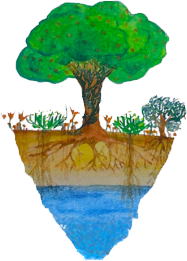

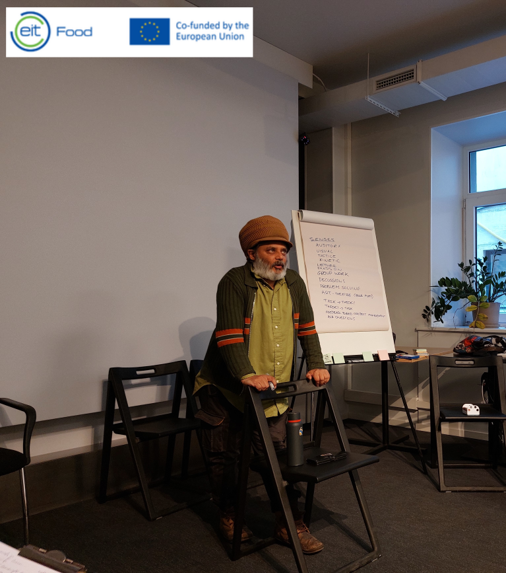
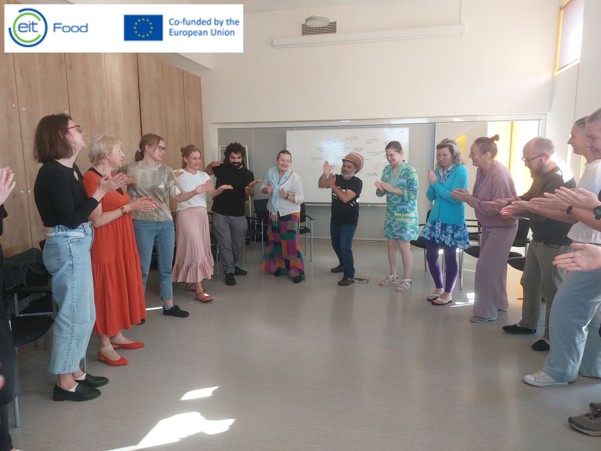
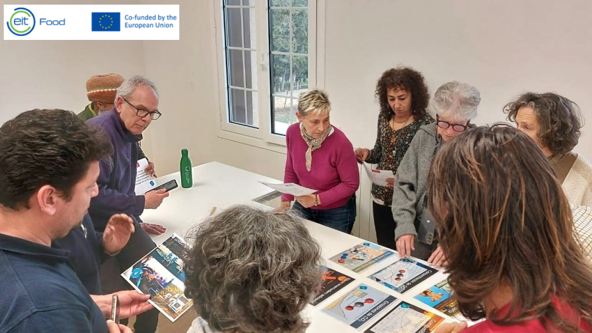
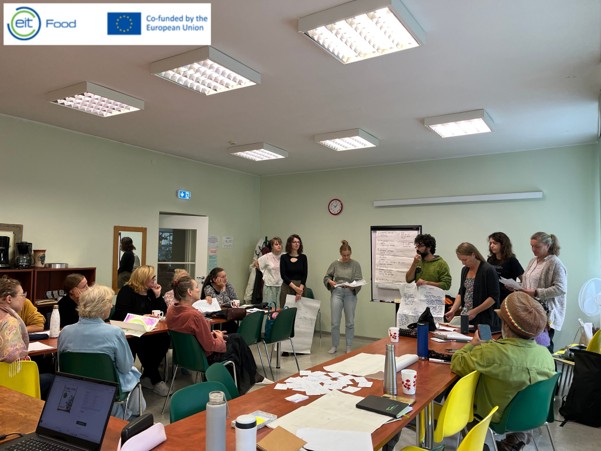
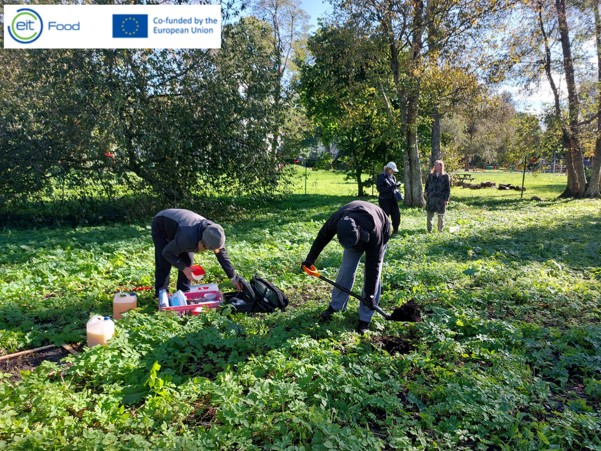
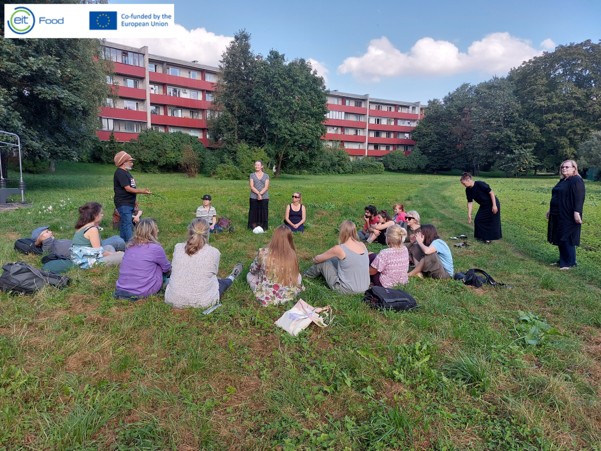
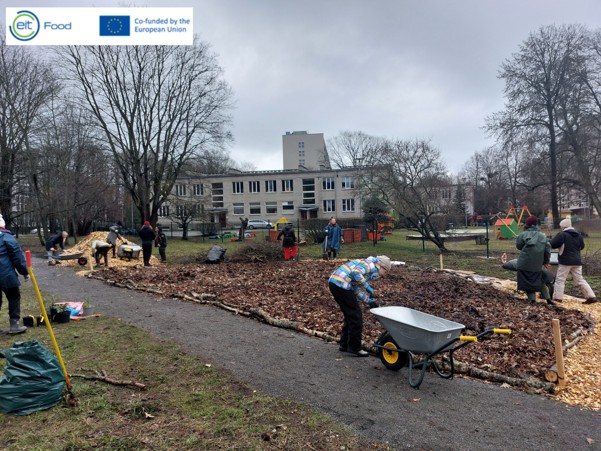
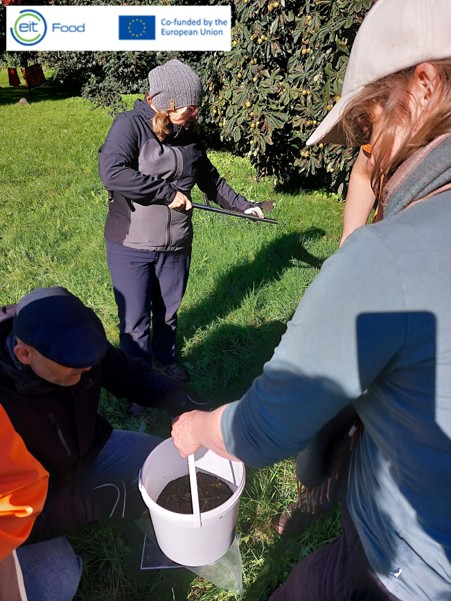
One of the first and most important steps within the FOOD FOREST project to create a Community Food Forest (CFF), was offering hands-on learning opportunities around permaculture and food forests. In Artajona (Spain) and Tallinn (Estonia), people from local communities joined different training activities led by Rakesh “Rootsman Rak”, from permaculture design courses to introductory sessions, teacher trainings and practical workshops on topics such as plant guilds. These experiences helped participants gain the skills, confidence and inspiration needed to imagine, create and care for their own community food forest and to pass this knowledge on to others.
The training programmes delivered followed a hands-on, participatory methodology. The programme combined theory, practice and collaborative work, with a clear focus: empowering the community to design their own food forest. Participants explored core permaculture principles, forest garden design, soil regeneration, water management and ecosystem resilience, while working in real spaces designed to be open and welcoming to all.
Group work, collective decision-making and design exercises played a central role throughout the courses, ensuring that learning outcomes were directly connected to the local context and community needs. This approach enabled participants not only to understand how food forests function, but also actively contribute shaping their future development.
Permaculture training provides a critical foundation for the successful creation of a food forest. Beyond technical knowledge, the courses foster community ownership, long-term stewardship and shared responsibility. By equipping participants with practical skills and design tools, the training ensures that food forest are not externally imposed solutions, but co-created, locally adapted systems rooted in collective knowledge and commitment.
The courses delivered in Artajona and Tallinn have therefore played a key role in laying the groundwork for resilient, community-driven food forests, strengthening both ecological outcomes and social cohesion. Through this educational process, communities are empowered to design sustainable food systems that will benefit present and future generations.
Rakesh Rootsman Rak. Permaculture Teacher Forest Gardener Cultural Bridge Builder
Rakesh, also known as Rootsman Rak, is a permaculture teacher, forest garden designer and advocate for regenerative living. His journey is not just about growing food. It is about growing people, communities and cultures rooted in connection, resilience and joy.
For over a decade, Rakesh has been sharing his knowledge across the world, teaching more than 700 courses in many different climates, cultures and communities. From small grassroots projects to established eco villages, his work centres on helping people reconnect with nature and with each other.

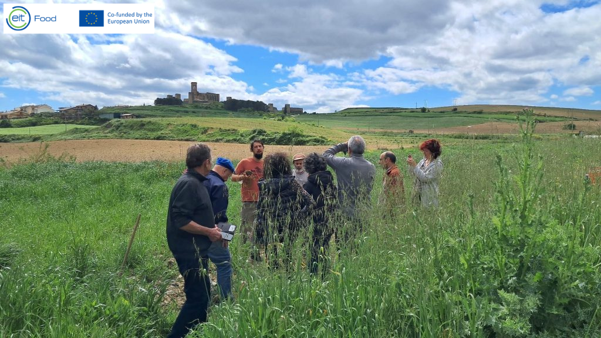



FOOD FOREST is a European initiative creating and testing Community Food Forests as living spaces for regenerative food production, ecological restoration, education and social innovation.Through pilot sites in Artajona and Tallinn, partners from across Europe work with local communities to develop knowledge and models that can be replicated and scaled.
Connecting Community Food Forests, projects and practitioners across Europe.
welcomes collaboration with institutions, researchers, practitioners, communities and organisations working on regenerative landscapes, food systems and community-led innovation.
Rotary Forests supports FOOD FOREST as a Strategic Benefactor, contributing economic, technical, creative and infrastructure resources to the project and its digital platform.