Category:.jpg)
.jpg)
.jpg)
.jpg)
.jpg)
.jpg)
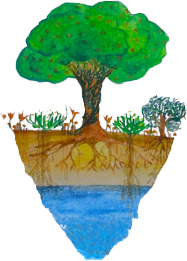
SpeiseWald Süd is an urban Community Food Forest being developed in Cologne, Germany, within the future Parkstadt Süd. Established in 2025 and currently under implementation, the project will transform approximately 2,000 m² of publicly accessible land provided by the City of Cologne into a diverse forest garden based on permaculture principles and regional edible plants.
Conceived as an interdisciplinary living laboratory, SpeiseWald Süd combines ecological restoration, food production, environmental education, participatory research and community engagement. Researchers and students from five faculties at TH Köln work alongside citizens, schools, public institutions and local organisations to explore how an urban food forest can strengthen biodiversity, climate resilience, food-system literacy and long-term community participation.
Approximately 20 people are directly involved at this stage. The project follows a community self-management model supported by researchers and students, creating a shared framework in which academic knowledge, practical experience and citizen participation can contribute to the design, implementation and future governance of the food forest.
SpeiseWald Süd is designed as an ecological system, a community space, an outdoor learning environment and a platform for applied research. Its multilayered planting model will allow researchers and participants to study the relationships between plants, insects, animals, soil organisms and urban environmental conditions over time.
Research and monitoring will establish an ecological baseline, compare the food forest with reference areas and document changes in biodiversity and ecosystem performance. The project will also examine its contribution to urban climate resilience through cooling, improved air quality, water storage, erosion control and the development of healthier soils and mycorrhizal networks. In the medium term, it aims to reduce irrigation requirements and explore greater self-sufficiency in water and energy.
Education for sustainable development is central to the initiative. Schools, pupils, parents and teachers will be able to participate in planting, care and maintenance while learning about biodiversity, food production, nutrition and the lifecycle of food. The site will support both formal and informal education, helping participants understand the connections between cultivation, harvesting, processing, consumption and recycling.
Community events, workshops, citizen-science activities and participatory planning will enable residents to observe ecological change and contribute to the project’s development. The food forest will also serve as a testing ground for inclusive governance models based on shared responsibility, voluntary participation and cooperation between universities, municipalities, schools and local communities.
Expected outcomes include increased urban biodiversity, healthier soils, improved water retention and better microclimatic conditions. The project also seeks to expand ecological and food-system literacy, create new educational opportunities and generate transferable methods for monitoring and communicating ecosystem services. Its work contributes particularly to Sustainable Development Goal 4, Quality Education, and Sustainable Development Goal 11, Sustainable Cities and Communities.
SpeiseWald Süd is connected to the Food Policy Council Cologne and collaborates with the City of Cologne, the TH Köln Living Lab, NeuLand e.V., participating schools and other regional organisations. These relationships support the involvement of different stakeholders in the planning, implementation and long-term development of the site.
As a member of the European Community Food Forest Network, the project is interested in exchanging practical experience, developing joint training and educational activities, participating in pilot projects and collaborating in research and documentation. It can contribute particular expertise in interdisciplinary research, urban food-forest design, citizen science, education for sustainable development and cooperation between academic institutions, municipalities and communities.
Contact person: Prof. Dr. Philipp Heidkamp
Email: heidkamp@kisd.de
Project information: https://urbane-gaerten.de/urbane-gaerten/gaerten-im-ueberblick/speisewald-s%C3%BCd-reallabor-und-urbaner-waldgarten,-k%C3%B6ln
Instagram: https://www.instagram.com/speisewald/

FOOD FOREST is a European initiative creating and testing Community Food Forests as living spaces for regenerative food production, ecological restoration, education and social innovation.Through pilot sites in Artajona and Tallinn, partners from across Europe work with local communities to develop knowledge and models that can be replicated and scaled.
Connecting Community Food Forests, projects and practitioners across Europe.
welcomes collaboration with institutions, researchers, practitioners, communities and organisations working on regenerative landscapes, food systems and community-led innovation.
Rotary Forests supports FOOD FOREST as a Strategic Benefactor, contributing economic, technical, creative and infrastructure resources to the project and its digital platform.